Field notes: the dust cloud that ate half a stockpile flight
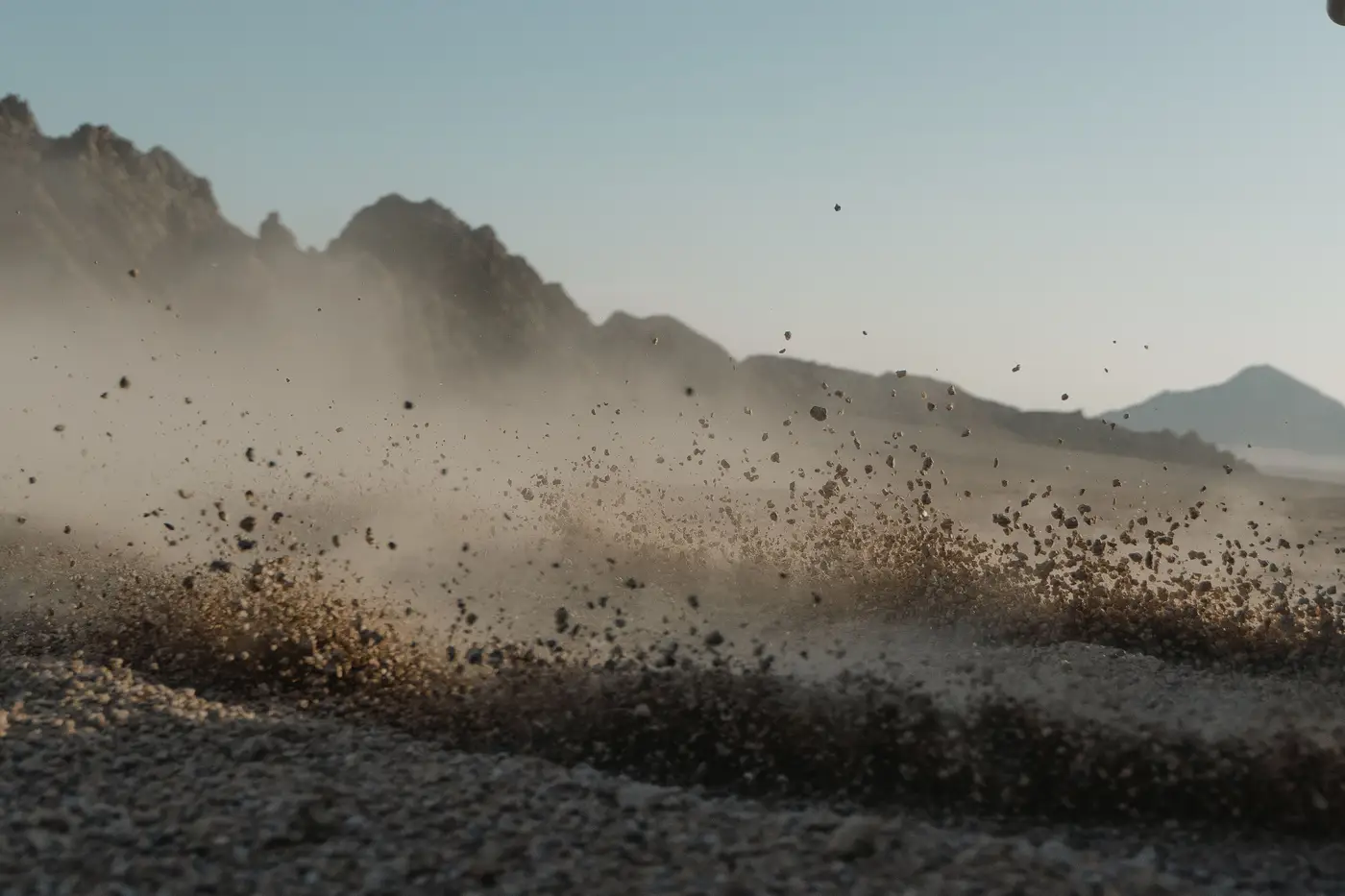
Tuesday, 2:40 p.m., a crushed limestone pad outside a plant that runs three shifts and never quite stops moving material. The flight plan was clean: eleven lines over the active pile, 70% overlap, GSD tight enough to pick up individual lumps on the crest. Then a loader rolled up the haul ramp on pile number four, dumped its bucket at the top, and walked straight through the frame on the next pass.
By the time the drone got to line six, the whole east half of the pile was gone. Not gone as in moved. Gone as in invisible, buried under a brown haze kicked up by tires and a bucket drop with maybe an 8 mph crosswind doing nothing to clear it. The images came back looking like someone had taken an eraser to half the tonnage.
Nobody puts this in the flight checklist: a stockpile site is an active work area, moving rock on its own schedule regardless of your sensor. The crusher operator has no idea you're overhead. The loader driver watches the bucket and the haul ramp, not a drone shadow. Moving rock kicks up dust, and dust ruins overlap faster than almost anything short of actual fog.
The photogrammetry math depends on the software finding the same point in multiple overlapping frames and triangulating it. Dust does not just obscure the pile, it changes contrast and texture frame to frame in a way that breaks tie-point matching even where you can technically still see rock through the haze. You end up with a surface model that has a confident, smooth hole exactly where the real pile has a lump nobody can account for. On a reconciliation run, that hole is the difference between a number the yard trusts and a number the shift foreman argues about for a week.
A few things we've started doing differently since that Tuesday:
Checking the loader schedule before the flight schedule, not after. Most sites have a rough rhythm to when the active pile gets worked, usually tied to truck queues or a batching cycle. Flying in the dead ten minutes between loads costs nothing and saves the reflight.
Watching the wind column, not just the surface reading. A calm ground-level breeze can still sit under a layer that holds dust in suspension at 60-80 meters right where the camera needs clean air. If the plume from the last dump is still hanging at altitude when the drone gets there, it doesn't matter that the anemometer on the scale house reads 3 mph.
Flying the active, working piles first and the dormant stock last, on the theory that the working pile is the one most likely to throw dust mid-mission, and you'd rather eat that risk early with time left to reshoot than discover it on the last line of the day when the battery's at 15%.
None of that eliminates the problem. Crushing and screening plants kick dust by design, and a weekly cadence means you'll catch an active pile mid-work more often than not. The useful habit is building the flight and the reconciliation schedule so one bad plume on one pile doesn't sink the whole week's numbers: fly the dust-prone piles on their own pass, separate from the quiet ones, and treat a site-wide flight as several small jobs instead of one that succeeds or fails together.
If you're the one explaining to a plant manager why Tuesday's tonnage on pile four looks nothing like Monday's inventory count, it helps to have a flight workflow built around exactly this kind of mess rather than one that assumes a tidy, dust-free pad every time. That's the problem Stockpile Volume is built to sit on top of, week after week, pile by pile.
Fly the quiet piles anytime. Fly the working ones with your eyes on the loader.